If you are dreaming about more space, a few acres, or a home that gives you room to spread out, Davidsonville can feel like the perfect fit. But buying a home on land here is different from buying a house on a standard subdivision lot, because the land itself can shape what you can build, change, or even maintain over time. When you understand zoning, septic, well, and permit issues before you write an offer, you can move forward with much more confidence. Let’s dive in.
Why Davidsonville land purchases are different
Davidsonville sits within Anne Arundel County Region 8, an area where county planning places strong emphasis on farmland, open space, and scenic-road protection. According to Anne Arundel County planning materials, land use matters here in a very real way, and the county’s Agriculture Commission reports 381 farms totaling 28,111 acres countywide.
That means when you buy a home on land in Davidsonville, you are not just evaluating square footage, finishes, or curb appeal. You are also buying into a parcel with its own legal and physical rules, and those rules can affect additions, outbuildings, subdivision potential, and even day-to-day use.
Check zoning before anything else
One of the most important early steps is confirming the parcel’s exact zoning. Anne Arundel County advises buyers to verify zoning through the Land Use and Zoning Map Viewer and county zoning resources because uses and bulk regulations can vary significantly from one district to another.
This is especially important if a property is in the Rural Agricultural, or RA, district. County planning materials describe RA as one of the most restrictive zoning districts in Maryland, with a density of 1 dwelling unit per 20 acres, plus a minimum front setback of 40 feet, or 50 feet if the lot fronts on a major arterial road.
If you hope to add another dwelling, subdivide land, or make major future changes, this step is essential. A property that looks flexible at first glance may be much more limited once you confirm the zoning rules that actually apply.
Review easements and preservation limits
Large lots in Davidsonville can come with agricultural, woodland, or preservation-related restrictions, and these should never be treated as minor details. According to the county’s agricultural and woodland district guidance, county and state preservation easement programs are voluntary and perpetual.
That word, perpetual, matters. If a parcel is subject to an easement, future subdivision or building plans may be restricted for the long term, so you will want to confirm exactly what is recorded against the property before moving forward.
The county also explains that parcels in a County Agricultural District generally must meet acreage, soils, planning, and utility-location criteria. If you are considering a larger tract, this is one more reason to look beyond the house and study the land records carefully.
Understand Critical Area rules
Some Davidsonville properties may also fall within the Chesapeake Bay Critical Area. If they do, development standards can become more restrictive.
The county’s Critical Area guidance says that Limited Development Area and Resource Conservation Area properties must follow a 100-foot buffer, impervious surface limits, and additional forest-protection rules. RCA areas are also limited to 1 dwelling unit per 20 acres.
For buyers, this can affect plans for additions, new structures, driveway expansion, lot coverage, and other improvements. County GIS tools, MyAnneArundel, and MERLIN maps are identified by the county as fast ways to check whether a specific parcel is affected.
Septic matters more than many buyers expect
If the home is served by a private septic system, the lot’s buildability is about more than just whether a tank and drain field already exist. The Anne Arundel County Health Department handles perc tests, septic design requirements, permits, inspections, and related reviews, and those details can have a direct effect on your plans for the property.
For example, a lot may need to support the existing home, the septic field, the required reserve area, and any future addition. If you are thinking about expanding the home later, this becomes especially important because septic adequacy can determine whether that improvement is even possible.
Before a perc test, county instructions say that property corners and the proposed house location must be staked, and some larger parcels may also need side property-line markers. The county’s perc testing guidance also notes that wet-season testing may be required in certain soil or groundwater conditions, with the wet season generally running from February 1 through April 30.
In many cases, at least three satisfactory perc tests are generally needed to establish a sewage disposal area. Some lots with adverse soil or groundwater conditions may only be developable if public sewer is available.
Additions can trigger septic upgrades
This is one of the biggest surprises for buyers who plan to renovate after closing. According to county property improvement guidance for well and septic properties, the existing septic system must be adequate for both current and proposed living space, and the property must also have room for two future replacement systems.
If the current system is not adequate, upgrades or modifications may be required before a permit can be approved. In some cases, the county allows a limited home addition of up to a 50 percent increase in living space, capped at 1,000 square feet with no increase in bedrooms, if an advanced pretreatment unit is added.
The county also states that if the existing system cannot handle the added load, a nitrogen-reducing BAT unit may be required, even outside the Critical Area. So if you are buying a home on land with plans to enlarge it later, it is smart to review those possibilities before you commit.
Private wells need their own due diligence
A private well is another area where a little extra research can protect you. County guidance explains that potable-water testing may include bacteriological, chemical, arsenic, cadmium, and physical analysis, and a Certificate of Potability is only issued after the required tests pass.
The county’s private well guidance also notes that adequacy of an existing well may require a licensed well driller to evaluate depth and yield or a certified lab to test water quality. EPA and CDC guidance, as cited by the county, recommend annual testing of private wells for total coliform bacteria, nitrates, total dissolved solids, and pH using a state-certified laboratory.
For you as a buyer, that means well review should be treated as a separate line item, not just part of a standard home inspection mindset. You want current documentation, recent sampling where available, and a clear understanding of whether the well is likely to support your household needs.
Outbuildings are not always simple
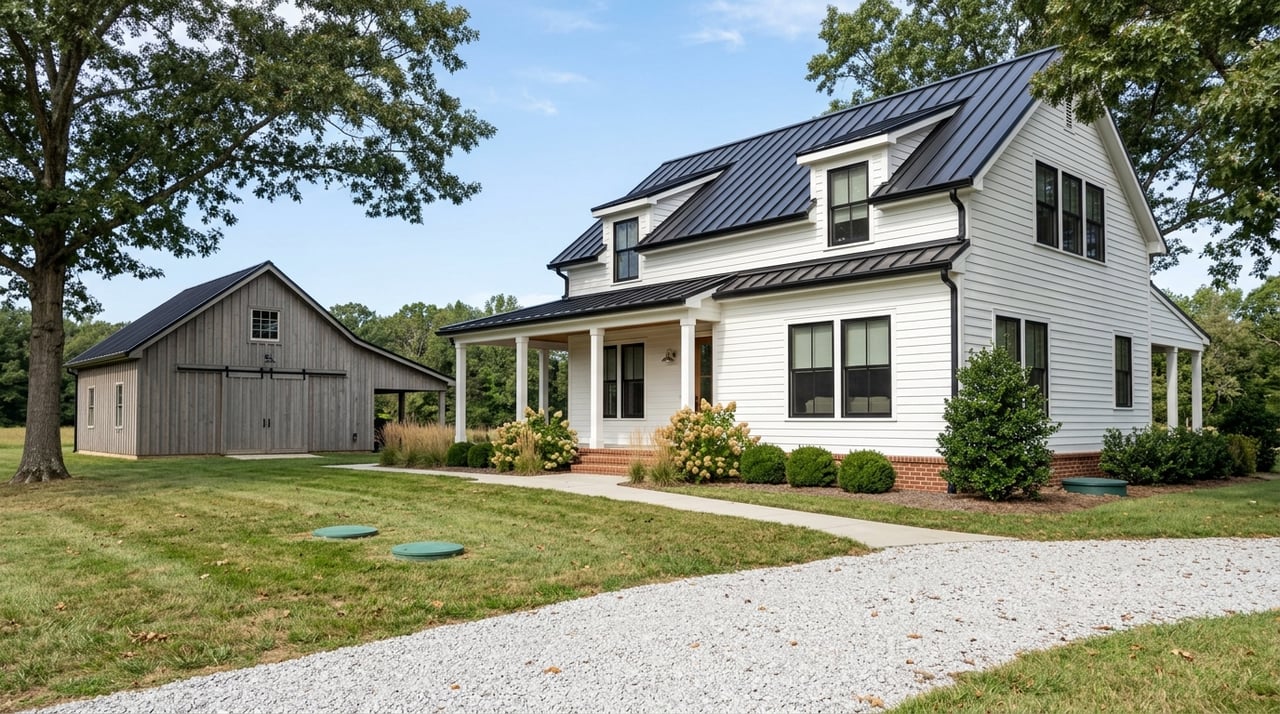
Many buyers looking in Davidsonville want a barn, detached garage, workshop, shed, or pool house. That is part of the appeal of buying a home on land. Still, you will want to confirm whether existing structures were properly permitted and whether future plans will require county approval.
Anne Arundel County states in its accessory structure permit guidance that residential accessory structures such as detached garages, barns, sheds, gazebos, pool houses, studio or workshop spaces, fences, and retaining walls may require a building permit. The county also notes that a shed not exceeding 10 feet in height and 150 square feet generally does not need a permit, except in the Critical Area, and a shed within 3 feet of the principal structure is treated as attached and always requires a permit.
This is one reason buyers should ask questions about every visible improvement on the property. A great-looking outbuilding can still become a problem if it was not built with the approvals the county required.
Questions to answer before you make an offer
When you are buying acreage or a home on a larger lot, your due diligence list should be more detailed than usual. A careful review upfront can save you time, money, and frustration later.
Here are some of the most important questions to answer:
- What is the parcel’s exact zoning?
- Is the property in the Critical Area?
- Is the land subject to an agricultural, woodland, or preservation easement?
- Are septic drawings, soil logs, site plans, and a well completion report on file?
- Have the well and septic systems been evaluated recently?
- Were existing outbuildings, decks, fences, or pools properly permitted?
- Would a future addition trigger septic upgrades or BAT requirements?
The county says copies of septic or well records can be requested online, although the records request process may take up to 30 days. If timing matters, it helps to start that process as early as possible.
Why specialist coordination matters
A Davidsonville land purchase often requires more than one inspector or one quick review. In practice, these transactions may involve planning staff, the health department, a septic specialist, a well professional, and sometimes a surveyor.
Maryland now requires anyone performing an on-site sewage disposal property-transfer inspection to be licensed by MDE, and each inspection must include the department’s standard form, according to the Maryland Department of the Environment. That makes the septic property-transfer inspection a separate specialist review, not a substitute for a general home inspection.
This kind of coordination is where a calm, local, detail-oriented approach can really help. When you have the right people reviewing the right parts of the property, you are far more likely to make a confident decision that fits both your goals and the parcel’s real limitations.
A smart way to buy in Davidsonville
Buying a home on land in Davidsonville can be incredibly rewarding. You may gain privacy, flexibility, room for hobbies, and the kind of setting that is hard to find on a standard homesite.
At the same time, the smartest buyers go in with a clear plan. They verify zoning, review easements, investigate Critical Area constraints, and treat well and septic review as essential parts of the purchase, not afterthoughts.
If you are considering a home on land in Davidsonville, working with someone who understands how to coordinate the moving pieces can make the process feel much more manageable. When you are ready for thoughtful guidance and local support, connect with Carol Gust for a conversation about your goals and the kind of property you want to buy.
FAQs
What should you check before buying land in Davidsonville MD?
- You should confirm exact zoning, ask whether the parcel is in the Critical Area, review any agricultural or preservation easements, and request available well and septic records before moving forward.
Why is septic review important for Davidsonville homes on land?
- Septic capacity can affect whether the current home is compliant and whether you can add living space later, since county rules may require system adequacy, reserve area, and possible upgrades.
Do private wells need testing when buying a Davidsonville home?
- Yes. You should review recent water-quality documentation and confirm whether additional testing or well-yield evaluation is needed, especially since private well systems require separate due diligence.
Can you add a barn or shed to a Davidsonville property?
- Possibly, but permit rules depend on the type, size, location, and whether the parcel is in the Critical Area, so you should verify county requirements before planning any accessory structure.
How do you verify zoning for a Davidsonville parcel?
- Anne Arundel County advises buyers to verify parcel-specific zoning through county zoning tools and map resources because permitted uses and development standards vary by district.